Transport Fever 3 Closed Beta: How Testing Shaped Launch
From the Transport Fever 3 closed beta sign-ups to launch day, here's how Urban Games' testing phases shaped the game you play today.
The Transport Fever 3 closed beta was one of the quietest yet most consequential phases in the game's road to release. Announced in June 2025, months before the September 29, 2026 launch, the beta gave a rotating pool of selected players an early look at Urban Games' transport tycoon sequel — and gave the studio critical feedback on balancing, clarity, and stability. Now that the game is officially out on PC, PlayStation 5, and Xbox Series X|S, it's worth looking back at how that closed testing process worked, who got in, and what it ultimately delivered for the release version you can buy today.
What Was the Transport Fever 3 Closed Beta?
Urban Games opened sign-ups for the Transport Fever 3 closed beta in June 2025, framing it as the studio's next major focus after the overwhelming response to the game's announcement. The goal was explicitly practical: identify where new features needed better explanation or balancing, and find opportunities to make changes that would meaningfully improve the player experience.
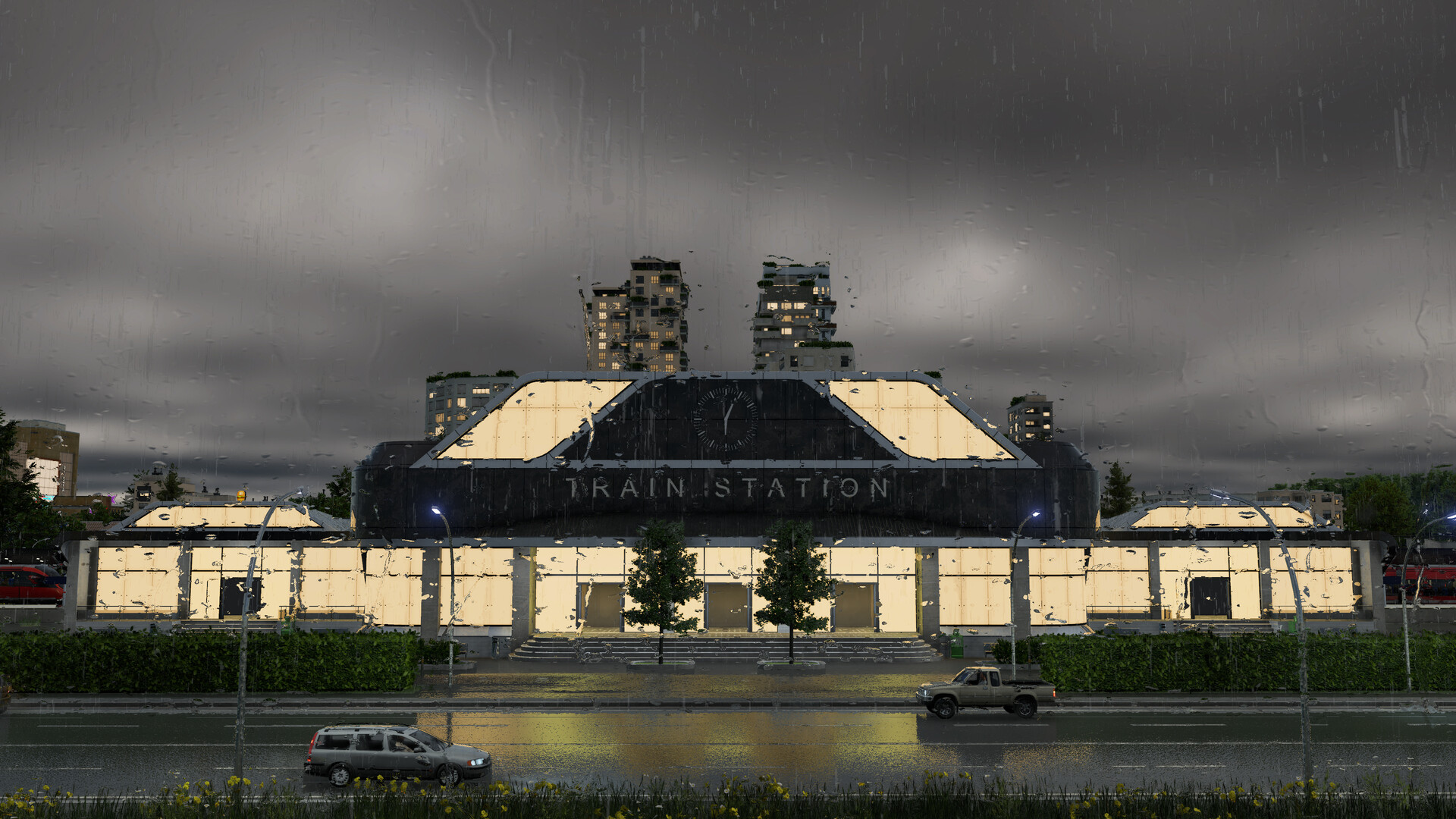
Official screenshot · Source: Steam store
Importantly, the team was upfront about what the beta was not. In their own words, it wasn't early access and it wasn't a demo. It was a structured piece of late-stage development, designed around controlled feedback rather than open play.
Key characteristics of the beta program included:
- Regular testing waves spread across several months rather than one continuous session
- Rotating participant groups, so the studio could capture genuinely "new player" impressions multiple times
- Small first cohort, with participants asked to keep their involvement confidential
- No guarantee of selection, even for players who signed up early
Why Urban Games Used Rotating Test Groups
The most interesting design decision in the Transport Fever 3 closed beta was the rotating-group approach. As the developers explained, you can only experience a game as completely "new" once — so if the same veteran testers played every build, the studio would lose visibility into how first-time players actually experienced tutorials, onboarding, and early-game pacing.
| Beta Feature | How It Worked | Why It Mattered |
|---|---|---|
| Rotating groups | Different players invited to different waves | Preserved authentic first impressions |
| Small initial cohort | Very limited first test | Controlled NDA and feedback quality |
| Confidentiality | Testers kept involvement quiet | Prevented spoilers and speculation |
| Deadline-driven sign-ups | Registration closed June 18, 2025 | Managed expectations for latecomers |
| Not early access | No open access, no demo | Kept the focus on development feedback |
This structure mirrors practices used across the strategy and simulation genre, where complex systems like cargo chains, industry balancing, and town development need targeted scrutiny before launch.
From Closed Beta to Release: The Timeline
The closed beta was just one milestone in a multi-year journey. Here's how the road to launch unfolded:
| Date | Milestone |
|---|---|
| June 11, 2025 | Closed beta announcement and last call for sign-ups |
| June 18, 2025 | Sign-up deadline (23:59 CEST) |
| July–August 2025 | "First Look" video series begins (environments, industries, cargo) |
| August 26–30, 2025 | Hands-on demo at gamescom in Cologne, Germany |
| August 25, 2026 | Release date announced: September 29, 2026 |
| September 10, 2026 | Tycoon gameplay overview revealed |
| September 29, 2026 | Official launch on PC, Mac, Linux, PS5, and Xbox Series X |
| Early October 2026 | First post-launch patch (build 40415) enters public testing |
That final row is telling: the collaborative feedback loop that started with the closed beta didn't end at launch. Within days of release, Urban Games pushed a stability and performance build to a Steam preview branch and invited community feedback through the official Transport Fever 3 Steam page.
Did the Beta Feedback Actually Improve the Game?
Based on the launch reception, the testing investment appears to have paid off in several areas — though not without controversy.
Where players report the game delivers
Community reports from launch day highlight meaningful quality-of-life improvements over Transport Fever 2. One highly-upvoted launch-day review described the game as "a way more complete game" with substantial QOL gains, while another player reported smooth 60–110 FPS performance on very large maps with heavy vegetation. These impressions align with the kind of stability and balancing work a closed beta typically surfaces.
Where challenges emerged anyway
Launch wasn't friction-free. Community reports in the first days flagged several pain points:
- A windowed-mode launch default that caused severe performance problems for some players until they switched to fullscreen — one player with an i7 CPU and RX 7900 XTX reported going from unplayable to 130+ FPS at 1440p after the switch
- Vehicle maintenance costs that some players felt snowballed out of control, with one community post describing a surprise multi-million debt spiral after going AFK
- Delivery algorithm quirks, where vehicles prioritize the wrong cargo on multi-good lines
- Town satisfaction systems (noise, pollution) that punish even well-intentioned transit expansion
The tycoon systems shown off before launch — evolving city demands, traffic management, pollution and noise control, and population satisfaction — are exactly the kind of layered mechanics that benefit from iterative testing, and Urban Games has already shown willingness to tune them post-launch.
Practical Lessons for Players Wanting Future Betas
If you missed the Transport Fever 3 closed beta and want in on future tests — including the ongoing public preview builds — here's what to do:
- Follow the official Steam news hub for Transport Fever 3. Update announcements, like the current build 40415 preview branch, are posted there first.
- Join the preview branch via instructions in the game's wiki if you want to test stability and performance patches. This is open to all owners, unlike the closed beta.
- Sign up early when tests open. The 2025 beta window lasted only about a week for new registrants.
- Manage expectations. As Urban Games stressed, closed betas are development tools, not early access — selection is never guaranteed.
- Report issues constructively. Player feedback on things like the fullscreen default and maintenance balancing has already translated into visible dev attention.
Editions and Pricing at Launch
Since the closed beta concluded, pre-orders converted into a full three-tier release structure. Here's the quick reference:
| Edition | PC Price | Console Price | Highlights |
|---|---|---|---|
| Standard | $49.99 | $59.99 | Base game |
| Deluxe | $64.99 | $74.99 | Eiffel Tower, Taj Mahal, 4 animals, 3 handcrafted maps, extras |
| Collector's | $119.99 | — | Deluxe content, 13cm Hero Statue, 200-page artbook, card game, poster, music box (limited to 10,000 copies) |
Transport Fever 2 owners received an automatic Loyalty Discount, available through 14 days after launch, and pre-order bonuses included the TS Queen Mary steamer, the Great Pyramid of Giza, and the Asian Elephant.
FAQ
Was the Transport Fever 3 closed beta open to everyone?
No. Sign-ups were open for a limited window ending June 18, 2025, but selection was never guaranteed. Urban Games used small, rotating test groups and explicitly stated that signing up did not ensure an invitation.
Could Transport Fever 3 closed beta testers share gameplay?
No. The first (and smallest) group of testers was asked to keep their involvement quiet. The beta was a confidential development phase, not a marketing demo or early access period.
Can I still test Transport Fever 3 updates now?
Yes. Unlike the closed beta, current patch testing — such as build 40415 with stability and performance improvements — runs on a public preview branch on Steam that any owner can access via the game's wiki instructions.
Did the closed beta affect the final game?
The developers said beta feedback was critical for balancing and clarifying new features, and post-launch community reports generally describe a more complete, polished game than Transport Fever 2 — though some systems like maintenance costs and cargo delivery logic are still being tuned based on ongoing player feedback.
Related Guides
Transport Fever 3 Demo: What We Know Before Release
Is there a Transport Fever 3 demo? Here's everything we know about trying the game early, plus a deep dive into the new Tycoon gameplay systems.
Transport Fever 3 Download: Where to Buy & What's New
Your complete guide to the Transport Fever 3 download on Steam and Epic, plus everything new in the ultimate transport tycoon sequel.
Transport Fever 3 Early Access: Launch Status & Details
Is Transport Fever 3 in early access? Here's the full launch breakdown, features, editions, pricing, and what players should know before buying.
Transport Fever 3 Release Date: Launch, Editions & Prices
The Transport Fever 3 release date has arrived. Get launch details, platform info, edition pricing, pre-order bonuses, and tips for day one.