Transport Fever 3 Tycoon Guide: Master Town Growth
Learn how Transport Fever 3 tycoon gameplay works: town ratings, delivery timers, landmarks, maintenance, and traffic tips to grow your empire.
Transport Fever 3's tycoon gameplay changes everything about how the series works. Money is no longer the finish line — it's the fuel. In the new Transport Fever 3 tycoon loop, your real goal is climbing your logistics company's ranks by leveling up towns, and that means mastering a web of ratings covering deliveries, happiness, noise, and pollution. Whether you're fresh off the September 29 launch or still deciding whether to buy, this guide breaks down exactly how the tycoon system works and how to keep every town glowing green instead of flashing red.
How the Tycoon System Actually Works
The core loop is simple to understand but tough to master. Towns gain experience points every time you deliver cargo or transport a citizen. Hit enough points and the town levels up — cue the fireworks. Leveling towns raises world population, and world population is what drives your company rank progression.
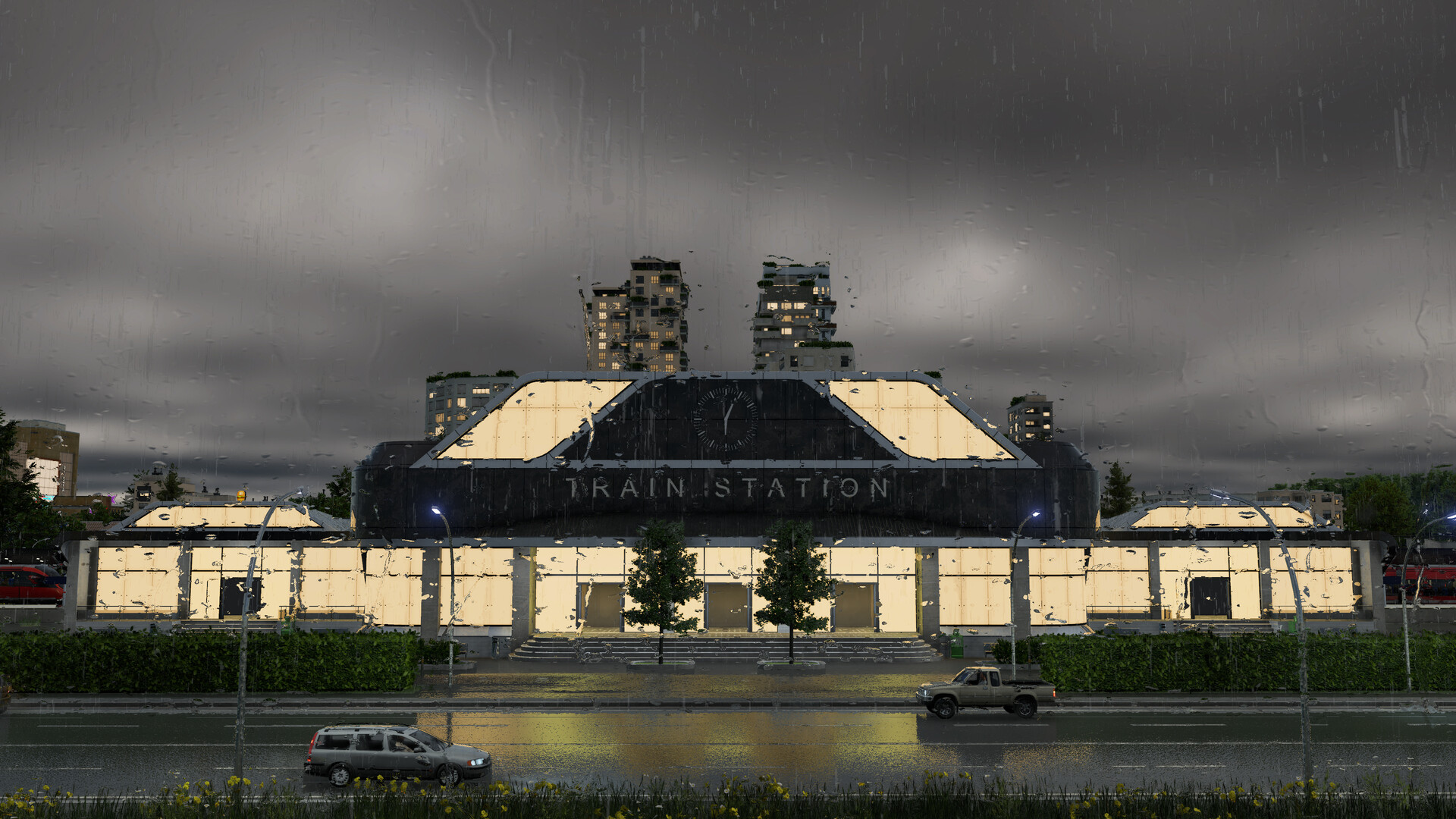
Official screenshot · Source: Steam store
The key shift from previous Transport Fever games: profit is the means, not the end. Urban Games designed the system so that your company rank unlocks the rewards that matter — more on those below.
| Tycoon Pillar | What It Does | What Happens If Ignored |
|---|---|---|
| Town growth | Earns XP via deliveries and passengers | Town stagnates, rank progression stalls |
| Town ratings | Green/yellow/red health indicators | Red ratings freeze growth entirely |
| Company rank | Unlocks landmarks, HQ upgrades, perks | You miss the game's biggest bonuses |
| Reputation | Boosted by subsidies and contracts | Fewer opportunities, slower towns |
A summary of each town's status appears in the heads-up display at the town center, so you can scan your network at a glance and spot problems before they cascade.
Town Ratings Explained: Green, Yellow, and Red
Every town has a set of ratings visible in the town window. Think of these as your dashboard:
- Green ratings: The town is thriving and expanding rapidly.
- Yellow ratings: Emerging problems are slowing down growth.
- Red ratings: Your network is lagging and town growth has stopped completely.
The trick — and this is where the tycoon gameplay gets demanding — is that side effects cascade. A single truck route stuck in downtown traffic doesn't just delay deliveries; it also generates noise and pollution, which then damage other ratings. According to the official Transport Fever 3 page on Paradox's site, every delivery, delay, and detour affects your reputation and revenue, and there's no plan that works forever.
Working one problem at a time is the recommended approach, per the developer's own advice on the official Steam community hub.
Cargo Deliveries: Beating the Delivery Timer
Every type of goods has an expected delivery time, and each item delivered late adds a small penalty to the town's delivery rating. Loading and unloading times are also significantly longer than in Transport Fever 2, making logistics planning a genuine consideration rather than an afterthought.
Here's a quick reference for your anti-delay toolkit:
| Tool | Effect | Trade-Off |
|---|---|---|
| Specialized warehouse | Freezes delivery timers while cargo waits in transit | Higher maintenance cost |
| Specialized loading platforms | Faster loading of matching cargo type | Slower loading for other cargo types (bulk, liquid) |
| Dedicated cargo tram lines | Bypasses road congestion, cuts noise and pollution | Upfront track construction cost |
| Shorter routes | Less time decay on goods | May require more transfer points |
The warehouse specialization is a lifesaver on long routes — goods like fish stop decaying while they wait for the next leg. Just be careful stacking specializations: a goods-focused loading platform will penalize bulk and liquid cargo at the same station.
Keeping Citizens Happy (and Why It Matters)
Passenger satisfaction needs just as much attention as cargo. If passengers get stranded, they slowly become unhappy — and unhappy citizens drag down the town growth you're chasing.
A practical diagnostic workflow:
- Open the town's ratings tab and identify the problem line.
- Check for visual signs of overcrowding at stations.
- Optionally, open an individual citizen's window to read their travel history — the game literally tells you who waited too long.
- Fix it with supply and comfort.
| Fix | How It Helps |
|---|---|
| Higher-comfort vehicles | Increases passenger patience for wait times |
| Comfortable station upgrades | Same patience boost at the stop itself |
| More vehicles per line | Improves throughput at overcrowded stops |
| Dedicated bus lanes | Keeps schedules reliable through traffic |
The vehicle store's compare feature makes finding a more comfortable replacement quick, so there's no excuse for running stranded commuters on rattletrap buses.
Noise, Pollution, and Municipal Areas
Network expansion inevitably creates side effects, and Transport Fever 3 introduces town municipal areas — land surrounding each town that isn't built up but still counts toward pollution and reputation ratings. Two rules of thumb:
- Towns monitor noise only in residential areas, so route truck lines through industrial and commercial districts instead.
- Pollution from external industries still bleeds into municipal areas and hurts the town anyway.
Countermeasures compared:
| Measure | Best For | Cost Consideration |
|---|---|---|
| Noise barriers | Rail lines near homes | Moderate ongoing cost |
| Underground rail | Dense urban cores | Expensive to build and maintain |
| Cargo trams | Last-mile freight in town | Cheapest long-term noise fix |
| Rerouting trucks away from residential | Immediate noise relief | Risk of delivery delays |
One community-reported pain point worth flagging: some early players have joked (bitterly) about building a tram system to fix satisfaction, only to trigger noise complaints instead. The lesson — route people-movers around residential zones just like freight.
Traffic Management: There's No Silver Bullet
Congestion is one of the biggest threats to a thriving town, and the game's traffic simulation treats every road as part of one network. Fixing a bottleneck in one spot just pushes the backup somewhere else — a simple one-way conversion on a main road is unlikely to work on its own.
A realistic traffic toolkit includes:
- One-way streets used judiciously, not blanket-applied
- Dedicated bus lanes for passenger throughput
- Lane assignments tuned per intersection
- Signal priority adjustments at traffic lights
- Waypoints to steer vehicles off congested corridors
- Dedicated freight tracks (like the cargo tram) to remove trucks from roads entirely
Expect iteration. The developer's own demonstration shows that even a radical solution like a bespoke cargo tram won't fix traffic outright — it just removes the noise, pollution, and stuck-delivery problems so you can tackle congestion separately.
Company Ranks, Landmarks, and Maintenance
Climbing the company ranks is the long-term goal of the Transport Fever 3 tycoon experience — and reaching the top rank is not something you'll accomplish quickly. Each new rank unlocks powerful tools:
| Rank Reward | Practical Use |
|---|---|
| Headquarters upgrades | Personalize your base with modules |
| Landmarks | Permanent map-wide bonuses (amphitheater: -25% road vehicle noise; lighthouse: +20% ship speed; pollution-reducing train perk) |
| Resource prospecting | Find new resource deposits |
| Industry cleanup | Reduce pollution at the source |
| Network promotion | Boost your transport network's reputation |
Landmarks get expensive fast — each one costs more resources than the last, and you can only build each landmark once per map, so placement matters enormously.
Contracts and subsidies appear from time to time, offering cash infusions or extra town reputation and experience for infrastructure work and deliveries. Industries may even approach you to deliver workers to boost their production. Take these whenever your cash flow allows.
Finally, maintenance has evolved. Vehicles are passively maintained only while within the catchment area of an appropriate depot or maintenance building. Skip maintenance infrastructure and your fleet gradually slows down while producing more noise and pollution. As the developers themselves put it: pro tip, it's worth the cost. Community reports back this up — neglected maintenance has reportedly sunk unattended companies into serious debt.
Customization: Play Tycoon Your Way
If all of this sounds like a lot, the game gives you full control over difficulty. You can adjust or eliminate individual systems — noise, pollution, town reputation — or crank them to maximum if you want a brutal test. Beyond tycoon mode there's a story-driven campaign, free game and sandbox modes, and a map editor that supports importing real-world height maps for authentic landscapes.
There's no wrong way to play — but if you came for the tycoon challenge, the checklist above is how you keep those fireworks launching.
FAQ
How do towns level up in Transport Fever 3? Towns earn experience points from every cargo item delivered and every citizen transported. Once enough XP accumulates, the town levels up and raises world population, which drives your company rank.
What do red ratings mean in the Transport Fever 3 tycoon system? Red ratings indicate your network is failing that town — growth stagnates entirely until you fix the underlying problem, whether it's late deliveries, unhappy passengers, or pollution.
How do I stop cargo from being delivered late? Use specialized warehouses to freeze delivery timers mid-route, add specialized loading platforms for faster loading, and shorten or bypass congested road segments with dedicated freight lines like cargo trams.
Is vehicle maintenance worth the cost? Yes. Without maintenance infrastructure coverage, vehicles slow down over time and generate extra noise and pollution — penalties that cascade directly into the town ratings your tycoon progression depends on.
Related Guides
Transport Fever 3 Beginner Guide: Tips for New Players
Our Transport Fever 3 beginner guide covers routes, depots, demand-driven cargo, and money tips so your first transport empire actually turns a profit.
Transport Fever 3 Bus Lines: The Complete Setup Guide
Learn how to design profitable Transport Fever 3 bus lines with smart stop placement, line routing, and fleet sizing tips for growing cities.
Transport Fever 3 Campaign Guide: Saving Mardi Gras
A full walkthrough of the first Transport Fever 3 campaign mission, Saving Mardi Gras, covering objectives, tips, and how to earn all three stars.
Transport Fever 3 Curved Stations: Full Guide
Everything we know about curved stations in Transport Fever 3, the history of the beloved TF1 mod, and how to get curved track layouts working today.