Transport Fever 3 Underground Station: Build Guide
Learn how to build a Transport Fever 3 underground station, run subway-style tram loops, and slash city traffic and pollution with this complete guide.
If your Transport Fever 3 cities are choking on gridlock, the underground station is the tool you've been waiting for. While Transport Fever 3 doesn't ship with a true metro system, the game lets you sink tram stops below street level, giving you a convincing faux-subway that keeps passengers moving without clogging your roads. In this guide, we'll walk through exactly how to build an underground station, lay tram-only tunnels, and connect multiple cities with a loop network that community experiments show can dramatically reduce congestion. Whether you're running one city loop or a four-town mega network, this build works.
What Is an Underground Station in Transport Fever 3?
Before diving in, it's important to set expectations. The Transport Fever 3 underground station is technically an underground tram stop, not a full subway station. It's found under the road vehicle construction menu, not the train menu, and it serves passengers only.
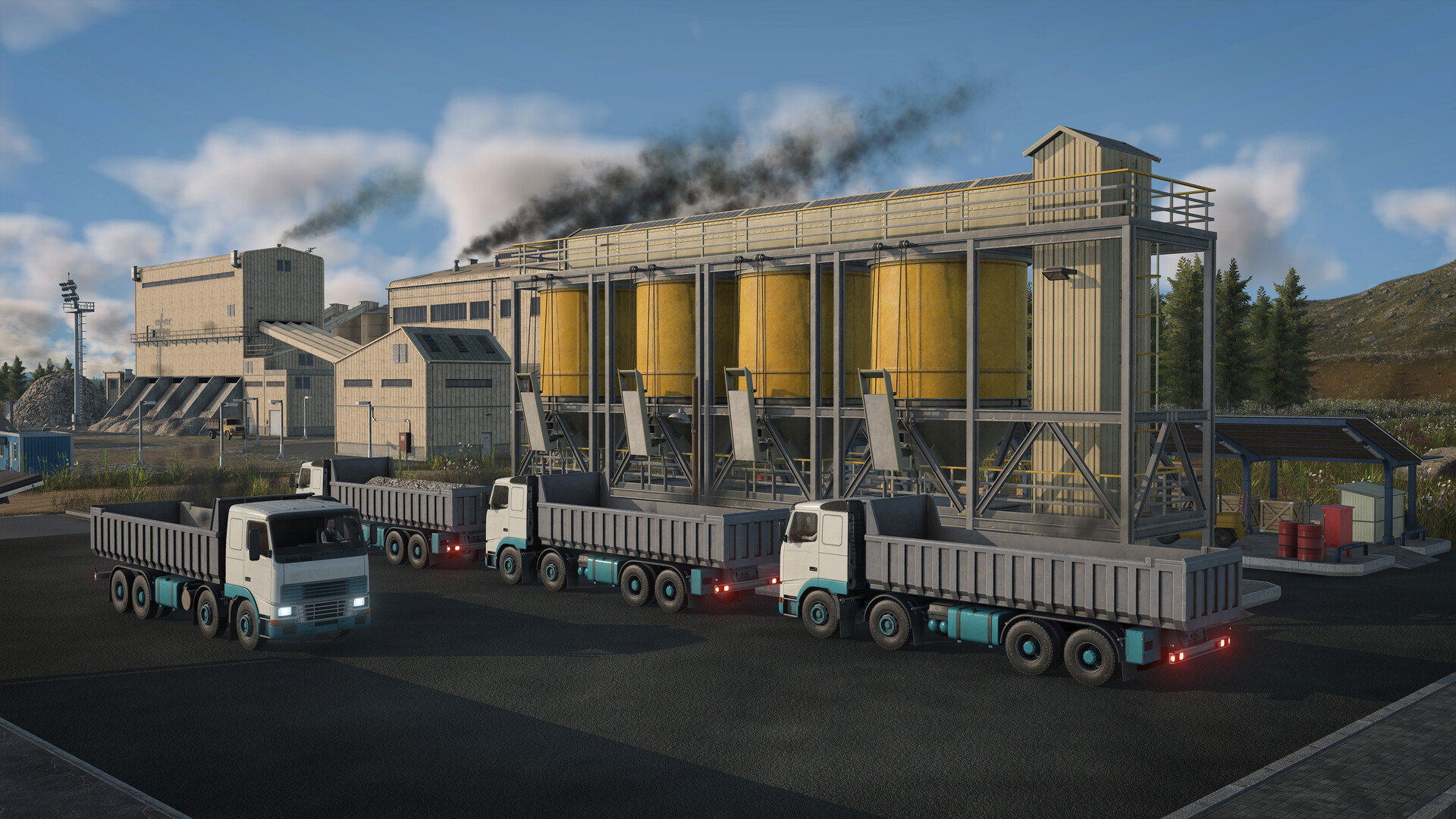
Official screenshot · Source: Steam store
Key facts at a glance:
| Feature | Detail |
|---|---|
| Station type | Underground tram stop with surface exit |
| Cargo support | No — passengers only |
| Found in menu | Road vehicles → stations |
| Underground view hotkey | G |
| Requires external tram depot | Yes |
| True metro system | Not in vanilla |
This has been a long-requested feature. Community discussion threads on Steam show players asking for underground rail and metro systems since before launch, noting that earlier games in the series weren't scaled for true urban metro networks. The vanilla underground stop is a solid middle ground — not a full metro, but the next best thing.
How to Build an Underground Station Step by Step
Building your first Transport Fever 3 underground station is surprisingly simple once you know where everything lives. Follow these steps:
| Step | Action | Tip |
|---|---|---|
| 1 | Open the road vehicle menu and select the underground stop | Look for the stop described as keeping tram lines underground |
| 2 | Press G to enter underground view | This lets you place and adjust depth |
| 3 | Drop the station below the surface | A surface exit structure is built automatically |
| 4 | Adjust platform length and orientation | Angle the platform so tracks align with your planned route |
| 5 | Place additional stops around the city | Space them for good coverage radius |
Once placed, the station generates an entrance on the surface while the platform sits beneath the road network. Passengers walk down from street level, board your trams underground, and never touch the congested roads above.
Laying the Tunnel Tracks
Here's the part that trips up new players: underground tram tracks are built through the roads menu, not the track menu. Scroll to the end of the road list and you'll find a tram-only road — a dedicated connection that only trams can use.
- Select the tram-only road, then press G for underground view
- Lower the depth to roughly -18 meters — player testing suggests -12 is too shallow and causes uphill routing issues, while -18 appears to be the sweet spot
- Bend your route between stations to form a loop
- Keep an eye on gradient as you curve; steep sections can push track back toward the surface
Connecting Trams: Depots and Lines
You can't build an underground tram depot, so you'll need one external depot on the surface with a connecting tunnel that rises back to ground level. Let the ramp follow the terrain naturally to keep gradients manageable, and place the depot as close as practical — the extra distance adds maintenance overhead.
Once your depot is linked:
- Create a new line following your underground loop
- Duplicate the line for the opposite direction (clockwise and counterclockwise)
- Assign light rail vehicles — modern-era trams feel most "subway-like"
- Start with one tram per direction and scale up based on demand
Vehicle choice matters more than you might think. Later-era light rail options carry more passengers and run faster, though some produce more pollution at the surface depot. Player experience suggests reskin mods can even make your trams look like proper subway trains if you want full immersion.
Why Underground Tram Networks Work So Well
The results from community experiments are striking. In one documented test across four cities, each town received its own clockwise and counterclockwise underground loop, all connected by a larger outer loop running in both directions.
The outcomes:
| Metric | Before | After |
|---|---|---|
| City-bound traffic backups | Long queues to intersections | Cleared within minutes |
| Above-ground pollution | High from buses and trams | Significantly reduced |
| Noise complaints | Elevated | Near-normal surface levels |
| Profitability | Mixed on small loops | Outer connecting loops highly profitable |
The logic is simple: underground trams don't share space with cars, so every passenger they carry is a vehicle removed from your roads. It's almost like public transit works — who knew?
Scaling to Multiple Cities
The multi-city formula that works best:
- One local loop per city, running both directions
- One large outer loop connecting all cities, also bidirectional
- Roughly 6 trams spread across local lines, plus 4+ on the outer loop
- Monitor the outer loop first — it carries the heaviest load and usually needs reinforcements
Per player experience, the big intercity loops tend to become the most profitable lines in the network, effectively printing money while local loops break even or better.
Design Tips for Maximum Profit and Coverage
Not all underground networks perform equally. Lessons from tested builds:
| Tip | Why It Matters |
|---|---|
| Make loops bigger, not tighter | Small loops limit trip length and revenue per passenger |
| Push stations toward city outskirts | Longer hauls earn more, but don't neglect the core |
| Space stops for a wide catchment radius | More residents within walking distance of an entrance |
| Add trams before adding lines | Frequency drives ridership more than raw coverage |
| Revisit depot placement | Closer depots cut maintenance distance costs |
One caveat on cargo: the underground stop displays cargo in its info panel, but you cannot actually deliver freight there. Cargo trams and trains can still travel through underground tunnels to keep pollution out of your city center — they just can't unload at these stops.
If you want a true modular underground metro with multiple levels and custom entrances, the modding community previously delivered impressive options for the series' previous installment, such as the popular underground station workshop mod by Enzojz. Expect similar community projects for Transport Fever 3 as the modding scene matures. You can follow official updates on the Transport Fever website to see whether native metro features arrive in future patches.
Common Mistakes to Avoid
- Building too shallow. At -12m your tunnel fights the terrain; -18m keeps gradients workable.
- Forgetting the depot link. No surface connection means no vehicles can ever reach your network.
- Overloading small loops. Two trams per direction is plenty for a tight city circle.
- Assuming cargo works. Double-check before designing a freight line around underground stops.
- Ignoring line direction. Always run paired clockwise and counterclockwise lines so passengers can travel both ways.
FAQ
Can you build an underground cargo station in Transport Fever 3? No. The underground station is passenger-only in vanilla. You can route cargo vehicles through underground tunnels, but freight cannot be loaded or unloaded at these stops.
Is there a real subway in Transport Fever 3? Not officially. The underground tram stop is the closest vanilla option, but with light rail vehicles and mods, most players agree it passes convincingly as a subway system.
How deep should underground tram tunnels be? Based on player testing, around -18 meters is the reliable depth. Shallower tunnels around -12 meters often conflict with terrain and create unwanted gradients.
Does the underground station reduce traffic in Transport Fever 3? Yes. Community experiments show city traffic backups clearing substantially once underground loops are active, along with reduced above-ground pollution and steady noise levels.
Ready to bury your transit problems? Grab the underground stop, drop to -18 meters, and give your cities the metro they've been dreaming of.
Related Guides
Transport Fever 3 Beginner Guide: Tips for New Players
Our Transport Fever 3 beginner guide covers routes, depots, demand-driven cargo, and money tips so your first transport empire actually turns a profit.
Transport Fever 3 Bus Lines: The Complete Setup Guide
Learn how to design profitable Transport Fever 3 bus lines with smart stop placement, line routing, and fleet sizing tips for growing cities.
Transport Fever 3 Campaign Guide: Saving Mardi Gras
A full walkthrough of the first Transport Fever 3 campaign mission, Saving Mardi Gras, covering objectives, tips, and how to earn all three stars.
Transport Fever 3 Curved Stations: Full Guide
Everything we know about curved stations in Transport Fever 3, the history of the beloved TF1 mod, and how to get curved track layouts working today.