Transport Fever 3 vs Transport Fever 2: What's New?
A detailed Transport Fever 3 vs Transport Fever 2 comparison covering campaigns, cities, construction, performance, and whether upgrading is worth it.
Transport Fever 3 launched on September 29, 2026, and franchise veterans immediately started asking the same question: is this a true sequel or just a reskin? The Transport Fever 3 vs Transport Fever 2 debate is playing out across Steam forums right now, with longtime players struggling to spot the differences and newcomers wondering which entry deserves their money. This guide breaks down every confirmed change — from the new Campaign mode to the revamped city systems — so you can decide whether Urban Games' latest transport tycoon simulator earns a spot in your library.
Quick Comparison: TF3 vs TF2 at a Glance
Before diving deep, here's a side-by-side summary of the most important differences between the two games.
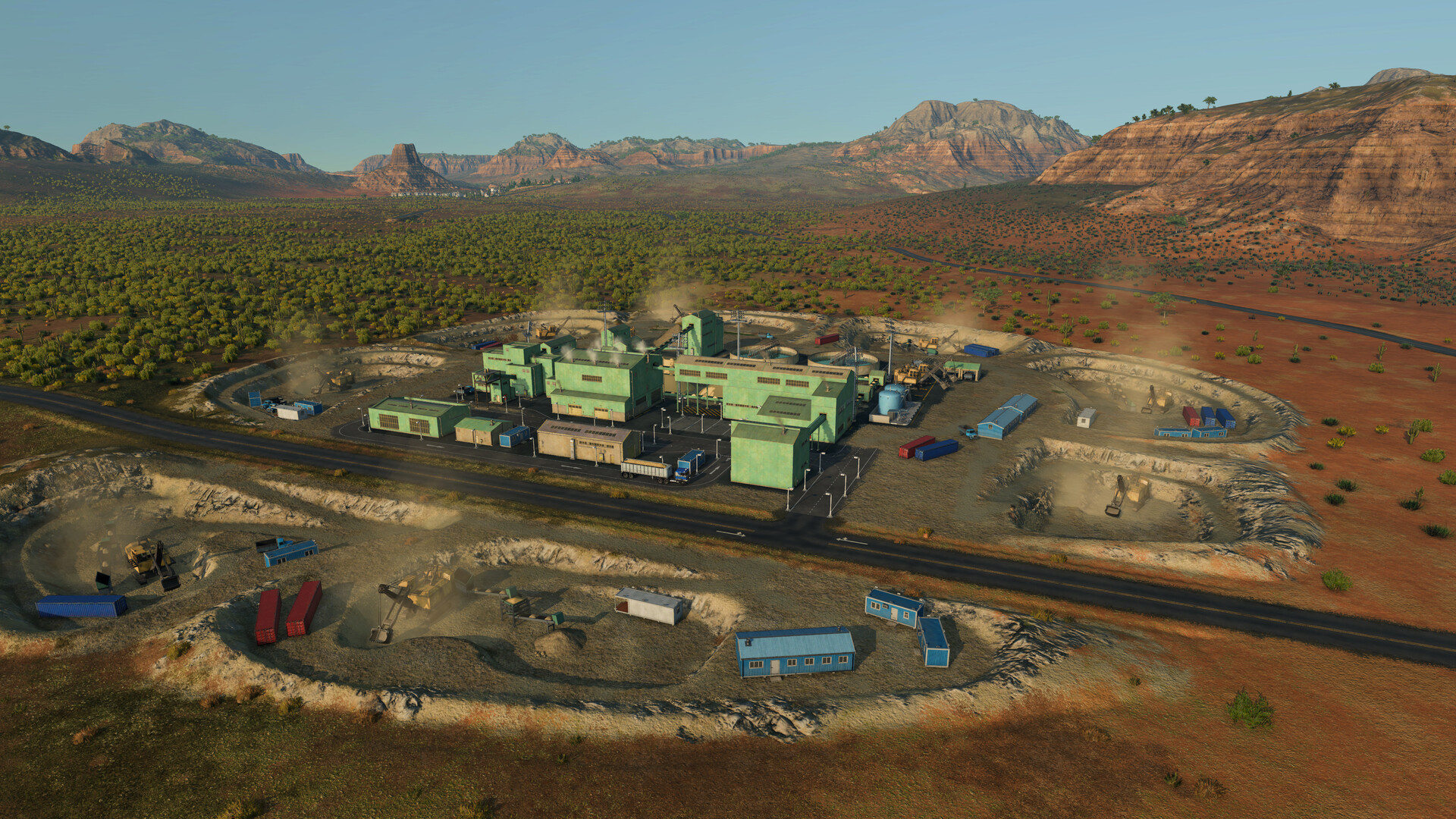
Official screenshot · Source: Steam store
| Feature | Transport Fever 2 | Transport Fever 3 |
|---|---|---|
| Release date | 2019 | September 29, 2026 |
| Developer / Publisher | Urban Games / Paradox Interactive | Urban Games / Paradox Interactive |
| Campaign mode | No story campaigns | Eight historical campaigns (1906–2033) |
| Day/night cycle | No | Yes |
| Underground construction | Limited | Much easier to build underground |
| Trams and trains sharing lines | No | Yes |
| Industry depth | Fewer industries per map | Up to 30 industries, dynamic and modular |
| Air and noise pollution | Basic | Expanded, affects citizen happiness |
| Reputation system | No | Yes — the "tycoon" layer |
| Price | Often discounted | $50 at launch |
The Big Question: Sequel or Fancy Upgrade?
This is where the Transport Fever 3 vs Transport Fever 2 conversation gets heated. A popular thread on the Transport Fever 3 Steam community forums opened with a blunt question from a dedicated TF2 player: what exactly is new? He listed features he believed carried over — noise mechanics, vehicle overtaking, cockpit view, tree growth, simplified construction — and asked whether TF3 is just "the same game in a new wrapper."
The honest answer, based on player discussion and early reviews, sits somewhere in the middle. One forum respondent called TF3 "a FANTASTIC upgrade" rather than a reinvention, but pointed to genuinely new systems: a full day/night cycle, streamlined underground building, trams sharing tracks with trains, and a reason to keep lower-tier track speeds instead of always maxing out.
| Genuinely new in TF3 | Carried over / evolved from TF2 |
|---|---|
| Eight story campaigns | Core logistics gameplay loop |
| Day/night cycle | Vehicle maintenance and deterioration |
| Trams sharing rail lines with trains | Licensed real-world vehicles |
| Underground construction made easy | Sandbox map generation with loans |
| 30 industries, dynamic modular buildings | Free-form line building |
| Reputation and city-focused tycoon systems | Mod support (TF3 inherits TF2 mods) |
The New Campaign Mode Is the Most Visible Addition
TF2 shipped without any real story content, and that changes dramatically in TF3. Urban Games added eight campaigns spanning more than a century of transportation history, each set in a real location during a specific era.
| Campaign | Location | Year |
|---|---|---|
| Saving Mardi Gras | New Orleans, USA | 1906 |
| Alpine Crossing | Domodossola, Italy | 1920 |
| Desert Adventure | Wadinrum, Jordan | 1956 |
| Biggest Festival Ever | Bethel, USA | 1969 |
| Oil for the People | Ekofisk Oil Fields, Norway | 1971 |
| Island Expansion | Manila, Philippines | 1999 |
| Big City Problems | Adelaide, Australia | 2015 |
| Final Countdown | Tanegashima, Japan | 2033 |
The Woodstock-era campaign ("Biggest Festival Ever") has drawn particular praise as a highlight. Expect roughly 10–15 hours total across all eight scenarios, with difficulty ramping up in the second half.
A few honest caveats worth knowing before you buy TF3 for the campaigns alone:
- Completion requirements are forced — you cannot skip objectives, and some are vaguely communicated
- The dialogue and voice acting are campy, with some reviewers speculating the lines may be AI-generated
- These scenarios work best as extended tutorials; the sandbox remains the heart of the game
If you're the type who replays campaigns, temper your expectations. The real value is learning systems you'll use in sandbox mode.
Cities, Reputation, and the Deeper "Tycoon" Layer
Community consensus holds that the biggest conceptual difference in the Transport Fever 3 vs Transport Fever 2 comparison hasn't even been fully revealed yet. Forum users noted that Urban Games has been releasing "First Look" teaser videos, and the most anticipated one — covering Cities — was still upcoming at launch. Early information points to a reputation system that governs how cities respond to your company, which players describe as the most "tycoon"-like element the series has ever had.
TF3 also expands simulation depth in ways that matter to builders:
- Air and noise pollution now factor into citizen happiness, so route planning carries new trade-offs
- Dynamic, modular industries — up to 30 per map — create more complex supply chains
- Contracts provide partial upfront funding, making expansion less punishing than TF2's loan-heavy early game
- Landmarks can be earned and built as visible symbols of company success
One community wish remains unfulfilled: several players noted there's still no confirmation of larger maps, off-map portals, rail shunting, or AI/multiplayer competition. If those were dealbreakers in TF2, verify they're addressed before upgrading.
Construction and Logistics: Streamlined but Still Deep
The core loop is unchanged — take a loan, connect resource producers to consumers, move workers with public transit, reinvest profits — but TF3 smooths the friction. Road and station construction is simpler, building underground no longer fights the interface, and more systems are automated than in the second game.
That said, Hardcore Gamer's review emphasizes that TF3 remains a steep learning curve, comparing the onboarding process to learning a brand-new board game. Some design quirks persist: you can sell a truck in a couple of clicks but sending one to the repair shop takes more effort. The tutorial still requires experimentation — for example, connecting two towns by rail may demand a feeder bus line near the station before the goal registers.
A practical tip for TF2 veterans: your knowledge transfers almost entirely. The satisfaction of optimizing lines, upgrading vehicles across 130 years of transport history (from horse-drawn wagons to 2030-era high-speed rail and jets), and watching towns grow naturally remains the core hook. Universities have even used the series to research real logistics design — TF3 deepens that simulation rather than simplifying it.
Performance: Better, but Still CPU-Bound
Performance was the biggest weakness of TF2 in late-game sessions, and it's a key data point in the Transport Fever 3 vs Transport Fever 2 debate. Community reports are mixed but cautiously optimistic.
| Perspective | Performance report |
|---|---|
| Steam forum user (RTX 3090, Ryzen 5800X, 64GB RAM) | Fine overall; only ship routes caused late-game issues in TF2, and the overhaul appears to address it |
| Hardcore Gamer review (Ryzen 7 9800X3D, RTX 5090) | Even top-tier hardware hit stutter as the world grew, especially when zoomed out laying roads |
| General takeaway | Ground-level and vehicle-view play is smooth; massive zoomed-out megabuilds still strain CPUs |
The lesson: TF3 is more optimized than its predecessor, but this genre is inherently CPU-heavy. If you build continent-spanning networks with tens of thousands of vehicles, expect to manage settings regardless of which game you choose.
Should You Upgrade from TF2?
Here's the practical decision framework:
| Your profile | Recommendation |
|---|---|
| New to the series | Buy TF3 — it's the most complete, accessible entry |
| TF2 player with hundreds of hours | Wait for a sale unless the campaigns and city/reputation systems excite you |
| Story/campaign fan | TF3 is worth it — TF2 had nothing comparable |
| Mod-heavy TF2 player | Good news: TF3 inherits mods from previous games via a curated program |
| Low-end CPU owner | Stick with TF2 or research benchmarks first |
At $50, TF3 delivers an enormous amount of content, and reviewers describe it as "an absolute addicting blast" once the learning curve is conquered. But if your TF2 save file still brings you joy, nothing in TF3 invalidates it.
FAQ
Is Transport Fever 3 worth buying if I already own Transport Fever 2?
It depends on what you want. The eight historical campaigns, day/night cycle, tram/train track sharing, easier underground construction, and the new reputation-driven city systems are real additions. If those appeal to you, upgrade; if you only play sprawling sandbox maps, TF2 remains excellent.
What is the biggest difference between Transport Fever 3 and Transport Fever 2?
The campaign mode is the most visible difference, while the reputation and city-focused "tycoon" layer is the deepest structural change. Community members widely agree TF3 feels like a fantastic, substantial upgrade rather than a complete reinvention.
Does Transport Fever 3 have better performance than TF2?
Partially. Player experience suggests the overhaul helps, but even a review rig with a Ryzen 7 9800X3D and RTX 5090 experienced stutter in large, zoomed-out worlds. Ground-level play runs well.
Can I use my Transport Fever 2 mods in Transport Fever 3?
Yes — TF3 features a curated mods program and inherited a large number of mods from previous games at launch, so much of the TF2 modding ecosystem carries over.
Related Guides
Transport Fever 3 Beginner Guide: Tips for New Players
Our Transport Fever 3 beginner guide covers routes, depots, demand-driven cargo, and money tips so your first transport empire actually turns a profit.
Transport Fever 3 Bus Lines: The Complete Setup Guide
Learn how to design profitable Transport Fever 3 bus lines with smart stop placement, line routing, and fleet sizing tips for growing cities.
Transport Fever 3 Campaign Guide: Saving Mardi Gras
A full walkthrough of the first Transport Fever 3 campaign mission, Saving Mardi Gras, covering objectives, tips, and how to earn all three stars.
Transport Fever 3 Curved Stations: Full Guide
Everything we know about curved stations in Transport Fever 3, the history of the beloved TF1 mod, and how to get curved track layouts working today.